Building in the UK’s Green Belt is often viewed as a “no-go” zone, but for those who understand the nuances of the National Planning Policy Framework (NPPF), it is actually a landscape of opportunity.
At Dwel Architecture, we specialize in navigating these complex protections. We don’t look for “loopholes”; we identify legitimate exceptions within national policy to help our clients secure planning consent for beautiful, functional homes where others might see only a dead end.
Expert Insight: Success in the Green Belt requires a “Planning-Led Design” approach. We don’t just draw a pretty house; we build a policy-based argument for why that house belongs there.
The primary aim of Green Belt policy is to prevent urban sprawl by keeping land permanently open. However, the NPPF (specifically Paragraphs 154 and 155 in the latest updates) acknowledges that certain types of development are not “inappropriate.”+1
Our high success rate is built on a deep understanding of these specific gateways. If your project falls into one of these categories, the “presumption against development” can often be overcome.
Key Exceptions We Use for Our Clients
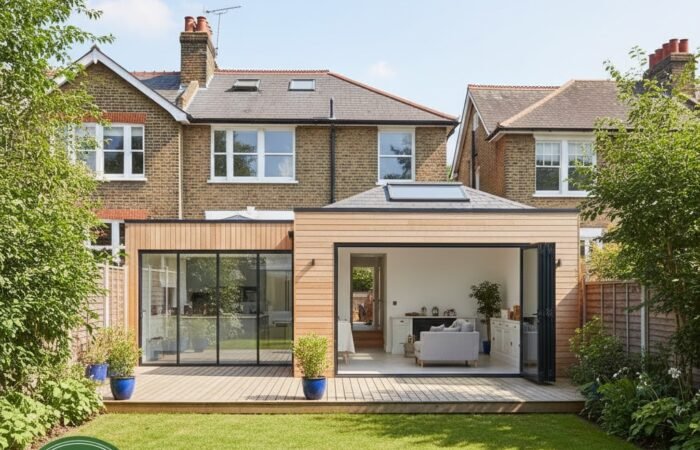
- Proportionate Extensions & Alterations: You are generally allowed to extend an existing dwelling, provided the new addition is not “disproportionate” over the original building. We work closely with local authorities to define these limits, often pushing the boundaries of what is possible through clever, sensitive design.
- Replacement Dwellings: If you have an existing home in the Green Belt that is dated or inefficient, the NPPF allows for a one-for-one replacement. The key is ensuring the new building is not materially larger than the one it replaces—a challenge we meet through smart spatial planning.
- Limited Infilling in Villages: If your site sits within a gap in an otherwise continuous built-up frontage in a village, it may be classed as “infill.” This is a powerful tool for creating new homes in highly sought-after rural locations.
- Previously Developed Land (Brownfield): Many Green Belt sites contain old stables, glasshouses, or redundant agricultural buildings. We specialize in the “partial or complete redevelopment” of these sites, ensuring the new design does not have a greater impact on the “openness” of the area.
- The “Grey Belt” Advantage: Following recent 2024/2025 reforms, “Grey Belt” land—previously developed land or land that makes a limited contribution to Green Belt purposes—has become a priority for sustainable development. We help identify if your land meets these new criteria.
Design That Preserves “Openness”
The biggest hurdle in the Green Belt is the concept of Openness. Planning officers aren’t just looking at whether a building can be seen; they are looking at its physical volume and “massing.”
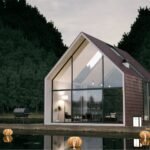
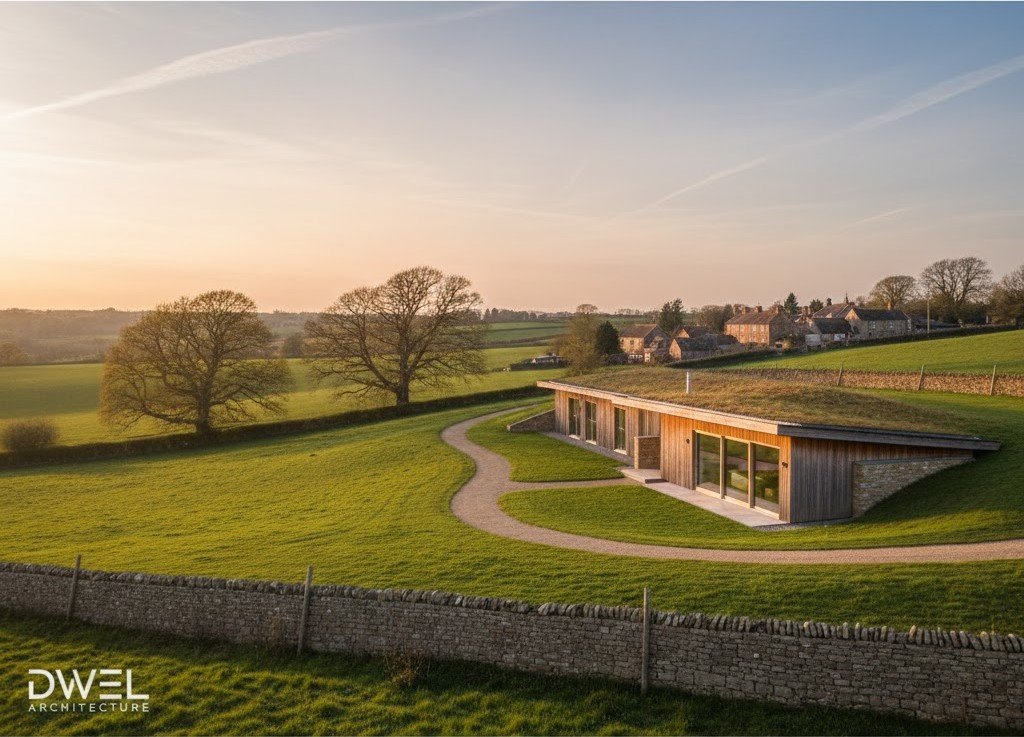
At Dwel Architecture, our design philosophy is “landscape-first.” By using natural topography, subterranean levels, or lightweight, glass-heavy structures, we can often increase a property’s footprint while actually reducing its visual impact on the surrounding countryside.
Navigating the “Very Special Circumstances” Route
If a project doesn’t fit neatly into an exception, we can look to demonstrate Very Special Circumstances (VSC). This might include outstanding architectural quality (sometimes referred to as the “Paragraph 84” or “Grand Designs” route) or significant environmental enhancements. While the bar for VSC is high, our methodical approach to evidence and design has helped many clients turn a “No” into a “Yes.”
Start Your Green Belt Journey
Do you have a plot of land or a home in the Green Belt? Don’t assume you can’t build. Let us provide a feasibility assessment to see which NPPF exceptions could work for you.
Would you like me to create a “Project Success” template for your portfolio to showcase a specific Green Belt win?

 Arki Architecture is a New-York-based studio practice focused on modern design, interiors and landscapes. From our inception in 2007, we have delivered exceptional public. As a full-service firm.